Frequency is the rate at which insured losses or claims occur within a defined exposure base and time period.
Why It Matters
Insurance performance depends on both how often losses happen and how large they are when they happen. Frequency helps insurers price everyday claim activity, identify deteriorating accounts, and distinguish nuisance-loss patterns from more catastrophic exposures.
How It Works in Real U.S. Insurance Practice
Frequency is usually measured against an exposure base such as vehicle years, payroll, insured locations, covered homes, or policies in force. A carrier may talk about claim frequency rising in a book even when the average claim size is stable. That matters because a steady stream of smaller losses can erode premium just as effectively as one large loss pattern.
Underwriters, actuaries, and claims leaders use frequency trends to review pricing adequacy, deductible design, risk-control effectiveness, fraud indicators, and renewal strategy. Frequency is almost always read together with severity because the same loss ratio can come from many small claims or a few very large ones.
A common simplified presentation is:
When readers pair frequency with severity, they are usually trying to approximate expected loss cost:
That shorthand is not a full actuarial model, but it is a useful quick-reference way to understand why frequent small losses and infrequent large losses can both create serious underwriting pressure.
| Pattern | Frequency | Severity | Typical concern |
|---|---|---|---|
| Parking-lot auto claims | High | Low | Attritional claim leakage, deductible fit, claims handling |
| Severe liability injuries | Low | High | Limits, reserve volatility, reinsurance |
| Cat-exposed property book | Low to moderate | Very high | Event concentration, catastrophe management |
| Fraud-prone small claims book | High | Moderate | Controls, pricing adequacy, investigation discipline |
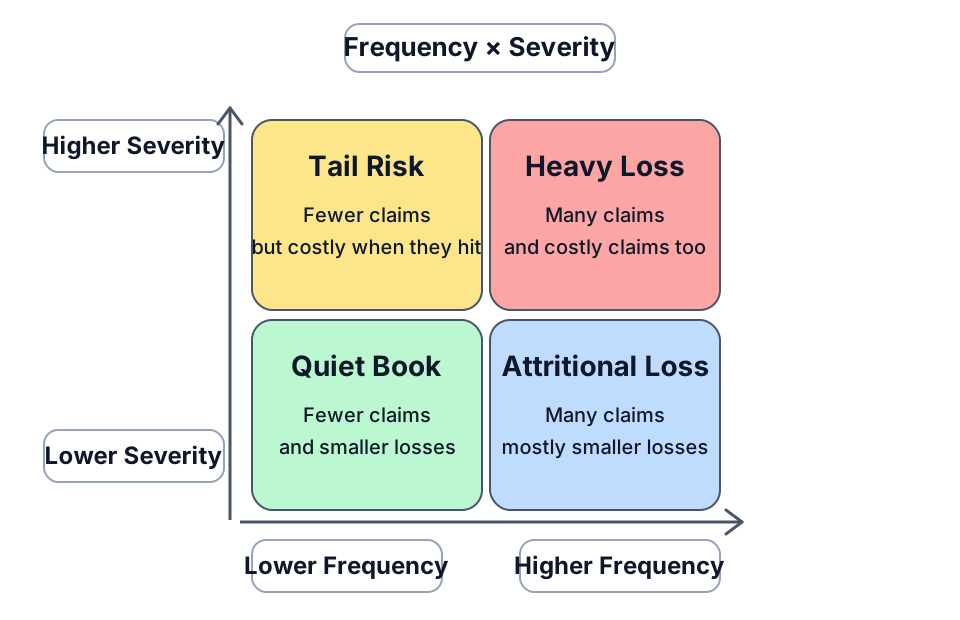
The same total loss cost can come from very different frequency-and-severity mixes, which is why underwriters and actuaries track both together.
Practical Example
A commercial fleet has many minor backing and parking losses throughout the year. Even if each claim is relatively small, the account may still be viewed as a high-frequency risk and renewed with tighter pricing or loss-control requirements.
Common Misunderstandings or Close Contrasts
- Frequency is not the same thing as severity.
- Rising frequency does not always mean the claims are large.
- Frequency analysis is only meaningful when the exposure base is clear and consistent.
Knowledge Check
If a book has many small claims but little catastrophic loss, can it still have a frequency problem?
Yes. Frequency is about how often losses occur, not whether each claim is individually severe.