Excess of loss reinsurance is a nonproportional reinsurance structure that responds only after the ceding insurer’s retention has been exceeded.
Why It Matters
This is one of the main ways insurers protect capital against large losses. It helps explain how carriers survive catastrophe years, support higher limits, and control volatility without ceding every dollar of premium and loss from the first dollar.
How It Works in Real U.S. Insurance Practice
An excess layer is usually described by attachment and limit, such as “$4 million excess of $1 million.” That means the ceding insurer keeps the first $1 million of covered loss and the reinsurer pays the next $4 million, subject to the treaty or facultative wording. If loss exceeds the layer, another layer may apply or the ceding insurer may keep the rest net.
Excess-of-loss structures can be written per risk, per occurrence, catastrophe, or aggregate. They are used to protect against severity rather than to share every claim proportionally from the outset. Reinstatement provisions, hours clauses, exclusions, and event definitions often matter just as much as the headline layer.
A common simplified layer view is:
For a simplified $4 million excess of $1 million layer:
| Covered loss | Cedent keeps | This reinsurance layer pays | Amount above this layer |
|---|---|---|---|
$600,000 | $600,000 | $0 | $0 |
$2.5 million | $1 million | $1.5 million | $0 |
$6 million | $1 million | $4 million | $1 million |
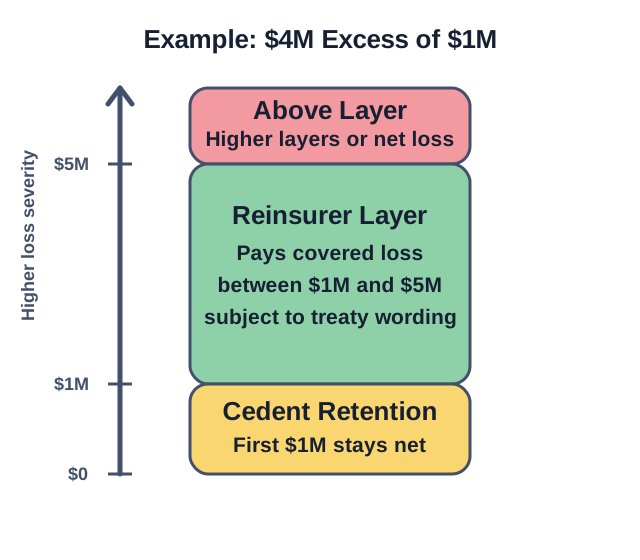
A single layer only protects the slice of loss between its attachment and limit. Larger losses may require higher layers or remain net to the ceding insurer.
Practical Example
A coastal property insurer retains the first $2 million of catastrophe loss from any one event and buys layers above that amount. After a hurricane generates losses far above the retention, the reinsurance program absorbs the higher loss layers and protects the carrier’s balance sheet.
Common Misunderstandings or Close Contrasts
- Excess of loss reinsurance is not the same as quota share or other proportional treaties.
- The retention is not the policyholder’s deductible; it is the ceding insurer’s retained layer in the reinsurance structure.
- A single excess layer may not cover the full event, especially if the loss penetrates multiple layers or exceeds program limits.
Knowledge Check
If an insurer buys excess-of-loss reinsurance, does the reinsurer usually share every covered claim from the first dollar?
No. Excess-of-loss protection normally attaches only after the ceding insurer’s retention has been exceeded.