Surplus lines insurance is insurance placed with eligible nonadmitted insurers when the admitted market cannot or will not provide suitable coverage for the risk.
Why It Matters
The surplus lines market gives buyers access to coverage for unusual, high-hazard, emerging, or otherwise hard-to-place risks. Without it, some insureds would have little realistic path to coverage.
How It Works in Real U.S. Insurance Practice
Surplus lines placement usually runs through specially licensed intermediaries and follows state-specific rules on eligibility, taxation, disclosure, and market access. Depending on the state and line, the placement may require some form of admitted-market check before using the nonadmitted market. Forms and rates are generally more flexible than in the admitted market, which is one reason the surplus lines market can respond to unusual risks.
| Placement step | What usually happens |
|---|---|
| Risk is reviewed against admitted appetite | Standard admitted carriers may decline, restrict, or fail to offer workable terms |
| Surplus lines access rules are checked | The producer or broker follows the state’s market-access, eligibility, and disclosure framework |
| Eligible nonadmitted insurer is used | Coverage is placed outside the admitted channel but within the lawful surplus lines path |
| Taxes and disclosures are handled | State surplus lines taxes, notices, and stamping-office or filing steps may apply |
| Surplus lines is useful when | The insured should still check |
|---|---|
| admitted carriers decline or restrict the risk | whether the nonadmitted insurer is eligible for the placement |
| the exposure is new, unusual, catastrophe-prone, or distressed | what exclusions, sublimits, and conditions differ from admitted forms |
| the risk needs more flexible wording or pricing | whether surplus lines taxes and notices were handled correctly |
| speed and specialty appetite matter | whether guaranty-fund protection is unavailable or limited |
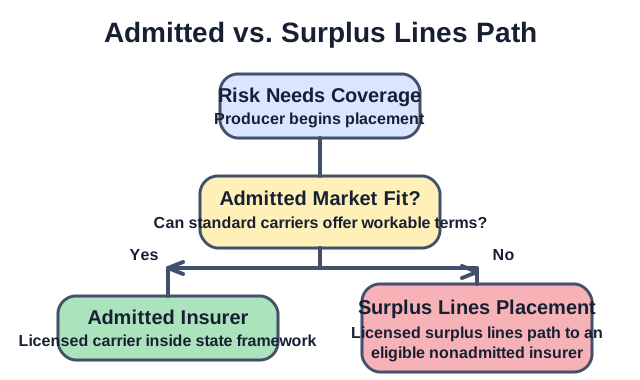
The key practical question is whether the admitted market can handle the risk on workable terms. When it cannot, surplus lines provides a lawful alternative path.
Practical Example
A vacant coastal hotel with heavy wind exposure and poor recent loss history may be declined by admitted carriers and ultimately placed in the surplus lines market through an eligible nonadmitted insurer.
Common Misunderstandings or Close Contrasts
- Surplus lines insurance is not a lower-quality substitute by definition. It is a different market channel.
- Greater form and pricing flexibility can help, but it also means the insured must read the wording carefully.
- Surplus lines placement is different from simply buying from any out-of-state carrier.
- Surplus lines does not erase the need for licensing, disclosures, taxes, or state-specific placement rules.
FAQ
Why would a business willingly buy from the surplus lines market?
Does surplus lines insurance usually come with state guaranty fund protection?
Knowledge Check
If a risk is placed in surplus lines, does that usually mean the admitted market was not a workable solution for that placement?
Yes. Surplus lines exists largely to handle risks that the standard admitted market cannot or will not cover on acceptable terms.