Umbrella insurance is an excess liability policy that sits above required underlying policies such as personal auto or homeowners insurance and provides larger limits for severe liability claims.
Why It Matters
Large liability losses can exceed the limits of an auto or homeowners policy surprisingly quickly. Umbrella coverage is designed to protect household assets and future income when a major injury or property damage claim pushes through those underlying limits.
How It Works in Real U.S. Insurance Practice
A personal umbrella policy usually requires the insured to maintain specified minimum limits on underlying auto, homeowners, or similar liability policies. Once a covered liability claim exhausts the underlying insurance, the umbrella can respond up to its own limit. Some umbrella forms also provide modestly broader liability wording than the underlying policy, but they still rely on their own exclusions, conditions, and retained amount rules.
| Umbrella question | Practical answer |
|---|---|
| What sits underneath it? | Usually personal auto, homeowners, renters liability, or sometimes watercraft liability with required minimum limits |
| When does it start paying? | After the covered underlying liability limit is exhausted, or sometimes after a retained amount on certain drop-down claims |
| What does it mainly protect? | The insured’s assets and future income against large third-party liability claims |
| What does it not replace? | First-party property coverage on the insured’s own car, home, or contents |
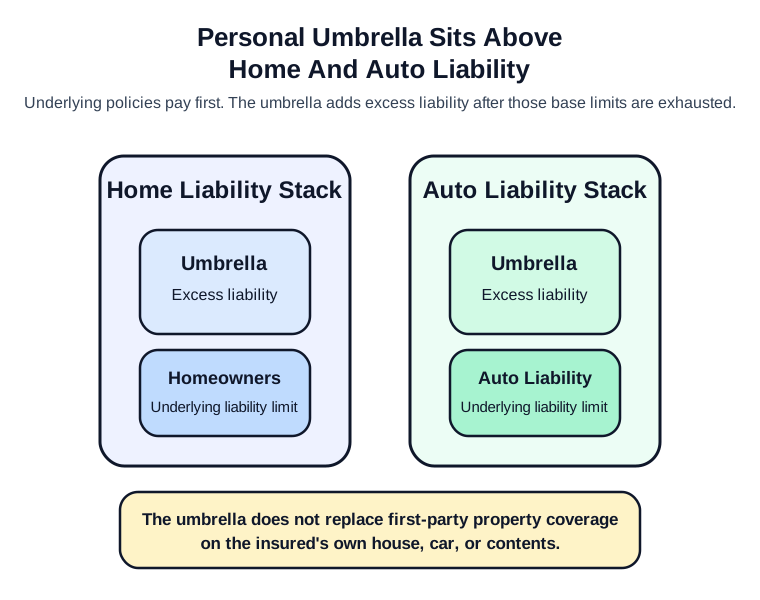
A personal umbrella adds excess liability capacity above the limits carried on the underlying household policies.
Practical Example
If an insured causes a catastrophic auto accident that produces damages well above the personal auto policy’s bodily injury limit, the umbrella may begin paying after the underlying auto insurer has paid its full limit.
Common Misunderstandings or Close Contrasts
- Umbrella insurance is primarily about excess liability, not broader property coverage.
- An umbrella does not replace the need for strong underlying auto and homeowners coverage.
- A household can lose umbrella protection if required underlying limits are not maintained.
- A very large umbrella limit does not fix a gap created by carrying too little underlying insurance if the form requires higher base limits.
FAQ
Does an umbrella policy cover damage to the insured's own house or car?
Can an umbrella policy drop down when no underlying policy applies?
Knowledge Check
If an insured buys a large umbrella limit but leaves very low auto liability limits in place, is the umbrella automatically a complete fix?
No. Umbrella forms usually require specified underlying limits and can leave the insured responsible for gaps if those underlying requirements are not met.