Incurred but not reported (IBNR) refers to claim costs from losses that have already happened but have not yet been reported to the insurer. It is a core reserve concept because insurers still owe for those losses even though no claim file may exist yet.
In practical terms, IBNR is one reason an insurer cannot measure its obligations by looking only at claims already on the books. Report lag, delayed injury discovery, late billing, and long-tail liability patterns all create costs that must be estimated before the insurer actually receives notice.
Why IBNR matters
Insurers use IBNR estimates to build loss reserves, evaluate profitability, and satisfy solvency expectations. If IBNR is understated, an insurer may appear more profitable than it really is. If it is overstated, pricing and financial results can be distorted the other way.
The issue is especially important in lines where reporting delays are common, such as liability, workers compensation, medical professional liability, and some health claims environments. A small reporting lag can be manageable. A long or changing lag pattern can materially affect reserve adequacy.
How the mechanic works
Actuaries and claims analysts use historical reporting patterns, severity trends, claim counts, and exposure information to estimate what has happened but has not yet surfaced. That estimate is not a guess in the casual sense. It is a structured reserve judgment built from development data and changing claim behavior.
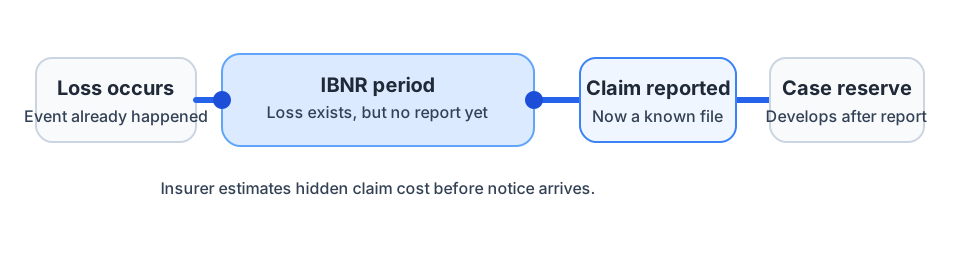
Known claims are usually carried in case reserves. IBNR sits beside that known-claim reserve need and captures the still-hidden portion of the insurer’s liability.
IBNR timeline
The key relationship is simple: the loss happens first, but the insurer learns about it later.
Practical example
A worker develops symptoms from a workplace injury but does not immediately file a claim. The accident or exposure has already occurred, so the insurer may already have a real obligation. Until the claim is reported, that exposure belongs in IBNR rather than in a case reserve tied to a known file.